Showing posts with label Atheism. Show all posts

Monday, October 26, 2009

Atheism ain't no faith.

I am reluctant to use the word atheist to describe my own unshakable disbelief, and that's not because I'm ashamed, afraid, or even embarrassed, but simply because it seems so self-evidently true to me that there is no god, and giving that conviction a special title somehow dignifies what it denies. After all, we don't have a special word for people who don't believe in ghosts or witches.

Jonathon Miller


There is a movement afoot in some atheist/humanist/whatever you want to call non believing circles that I find, well frankly, quite stupid.

There are more than a few of my fellow non-believers - fellows only because we don't believe in the supernatural, not because we belong to some international organization of atheists - who feel that as a bunch of people who don't subscribe to any religion of any sort we should still be afforded the same recognition as believers in every aspect of life.

Now, in one sense this is a worth while goal in the political arena. Non-believers should and could run for office, and not be discriminated against for the lack of belief in politics or business. Ensuring equally opportunity for everyone, regardless of religion or non-belief, is a core value of secularism.

However, the stupid raises its ugly head when atheists start to claim that our non-belief is the same as, equal too, or otherwise indistinguishable from religious belief, and therefore should have ALL the same exceptions made for us that are made for the believer.

Case in point: a recent episode of the Micheal Coren Show. For those who do not know, Coren is a writer, tv show host, Christian apologist and polemicist. His show, which covers political and religious matters runs from the mind numbingly dull to the truly interesting depending on his guests. Coren himself is a brilliant debater and few of his guests can match the force of his arguments, even when his argument is full of holes. (I've always wanted to test my rhetorical skills against his.) More often than not, I disagree with Coren. But on this particular subject, I was forced to agree.

One of the subjects of this particular program was religious exemptions for university students - basically students have who religious obligations or a festival or whatever can get an exemption from a professor to take an exam at another date and so on. On the panel was one of Canada's leading public non-believers Justin Trottier whose argument exemplified the kind of massive blunder I am talking about.

To be fair to Trottier, he has done a lot - maybe more than anyone in Canada - to raise the public profile of atheists and encourage us to stand up and be counted and not allow the religious to bully us into silence. But on this particular point, I think he was wronger than two left shoes.

He argued that a atheist student might want to attend say, a scientific conference, and that should be given the same exemption as attending a religious service. Coren, who believes in a privileged position of Christianity in society, said this was nonsense because a scientific conference is not at all the as a religious ceremony. Trottier tried to say that for the atheist it would be - but it ain't. It just ain't.

The problem, of course, is that as an atheist, I have no religious belief in anything. "Faith" in most contexts is a dirty word for me because it implies belief without evidence, which in turn results in irrational decision making which as the potential to cause serious harm. The claim that a scientific conference is equal in the eyes of an atheist to a religious service is barking mad. I, and most atheists I know, do not "believe" in science the way that a Christian believes in a god. I don't have faith in science, scientists, or regard their work as immutable and not to be questioned or challenged. Atheists have no holy books, no devotional requirements or sacraments. Nor do we need or want them!!

A Christian or a Jew or Muslim will have some day or another that they consider holy and according to their faith have to do certain things on said day. I probably consider just about all of those reasons to be irrational in the extreme. Doesn't matter. I don't respect the belief, but rather the right of people to believe. Some allowance in a secular society needs to be made for that.

But for science? For a conference? Yah, no. I have no devotional reason to attend a conference. A student could ask for flexibility and might well be deserving of it. But the fact is there is no such thing as a atheist equivalent of a religious service. And to invent one means one is creating a quasi-religion for the irreligious and implying that science ought to be worshiped - which is just daft.

I have argued elsewhere this is the problem with "atheist churches" - groups that ape a church but slap an atheist label on it. An atheist church is like the vegetarian who cannot admit what his canine teeth are for and so makes fake-meat like food stuffs to stand in for the real thing.

One of the true joys of atheism is that it frees you from the inane and archaic ceremonies of thousands of years ago that make no rational sense. Wine into blood may make for decent poetry, but as a physical fact is completely insane. Nothing drives me more crazy than claims by the religious that I have "faith" just like they do, when the fact is I don't. Not even a little.

We don't need, as Christopher Hitchens has pointed out more than once, to ape the structure of religion, or gather once a week to remind ourselves of the fundamental irrationality of religious faith. I understand the need for community, but it can be done without trying to claim for atheism equivalents for everything religion is. That is, in its way, as foolish as the believer who looks for atheist parallels to their religious belief and ends up using such thick-skulled canards as "atheists believe everything came from nothing" or "atheists worship Darwin." Because do to that would start to make an institution out of atheism and turn it into what those so many theists want it to be - a religion.

Atheism ain't no faith!

Saturday, September 5, 2009

Get in the Sack for Sept 6, 2009 - Pope Benny


Right now I would take homeopaths and I'd put them in a big sack with psychics, astrologers and priests. And I'd close the top of the sack with string, and I'd hit them all with sticks...And when someone asks the big questions - I don't know what happens after a I die, or what happens when my loved ones die, or how do I stop myself from dying - the big questions and they give you a nice bullshit answer and you say 'Well, do you have any evidence for that? and they say "There's more to life than evidence". Get in the fucking sack.
-Dara O'Brian


It's almost embarrassing to read the ongoing debate between atheists and theists sometimes these days. The extent of ridiculous hyperbole sometimes makes my brain hurt to the point where my ears nearly bleed. This is especially true of statements may by some theists, particularly those of the fundamentalist Christian variety, about what atheism is and what it means.

Take Eddie Snipes, a writer for the Examiner, whose four-part series of articles on evolution is maybe the staggeringly display of mind numbing stupidity I have read in a while. His description of Charles Darwin, the theory of evolution, genetics and atheists is so twisted that when I read it I thought I had slipped into a parallel reality where words had totally different meanings. Consider this gem from this series called "Natural Selection - Atheism Trojan Horse." (oh and please note he hasn't discussed natural selection that remotely reflects science and appears to not have any real clue what the Trojan Horse is or what it is a metaphor of.):
The evolutionary theory was born out of a desire to provide an explanation of the origin of life without a Creator. Since the goal is to distance themselves from God, disproving the argument will never change the mind of an atheist. Their primary goal is to remove God so when one argument fails, an alternative version is formed. Let me also clarify that many call themselves atheists because they have only been exposed to the crafty arguments of atheism and are not aware that the evidence contradicts the doctrines of atheism and agrees with the scriptures.

When I refer to atheism I am assuming that the reader understands that I am referring to those who are in rejection of the truth and will not be persuaded in the face of any evidence. Many will be open to the truth of scripture when they realize that they have been hoodwinked by the one-sided propaganda that is being passed off as reason and free thought.
To point out everything that is wrong with these two paragraphs would take an essay in and of itself. Just discussing how Darwin's studies that resulted in the theory of evolution by natural selection was a justification to prove "atheism" and reject "the truth" could fill an entire university paper. The fact is that, despite what Eddie and others might say, Darwin did not set out to disprove theism any more than astronomers set out to disprove Bigfoot. Darwin, like all good scientists worked within the scientific method that seeks natural explanations for natural phenomenon. And if you think "god did it" works as a scientific explanation, consider how happy would be if that was your doctor's explanation for why contracted a serious illness, gave you a prayer book and sent you on your way. Antibotics are for the heathens!

However painful it would be to read all of Eddie's postings and tear them down here to put him in the sack, there appeared a far worthy subject who makes Eddie's musings on atheism seem like the zenith of intellectual activity by comparison. The present Pope of the Catholic Church.

Now, truthfully, one expects more from a pope than the level of mental knuckle dragging found in some corners of the Examiner. After all, Pope Benedict is a well educated man, leading a church that is well over a thousand years old. But alas, that appears to be much to hope for.

One of the more pitiful theist arguments is what is sometimes called the moral argument for god. I have dealt with this a few times on the Handbook, so I won't get into a full discussion here. But the argument basically says that because there are morals, there must be a god. The low brow version of this argument says "if you don't believe in god, you are an unethical, evil schmuck." Essentially the idea here is that if you reject believe in a god (usually this means a specific god like Jesus.) then you are only left with your pitiful, evil, useless human mind and emotions to sort out what is right and wrong. So corrupt are we as a species that if we did not have a Bible or Koran we would simply run about killing and raping each other at will....and probably would not regard said killing or raping as particularly bad.

As Richard Dawkins and Christopher Hitchens often point out, however, the person who says they would be a wanton killer without the 10 Commandants has revealed more about themselves than the content of a holy book. The fact of the matter is that religion or a belief in a god is not a requirement for moral or ethical action and, indeed, as I have pointed out before, theistic concepts of good and evil in the context of a all power god are, at best muddy.

However, the usual "whats to stop you from raping people if you don't believe in god" got an original, if just as stupid, spin recently thanks to the Pope.

During a recent speech, the Pope declared that environmental damage caused by humans is the fault of - wait for it - ATHEISM!!!!
Is it not true that inconsiderate use of creation begins where God is marginalized or also where his existence is denied? If the human creature's relationship with the Creator weakens, matter is reduced to egoistic possession, man becomes the ‘final authority,’ and the objective of existence is reduced to a feverish race to possess the most possible.

That's right folks - unless you believe in the Christian god and the Catholic church you are unable to figure out that running about and torching rain forests or making gorrila vests is a bad thing.

The hilarious part of this is that Christian environmentalism - that is environmentalism that uses the Bible as its principle justification - is a relatively new thing and is largely found not in Catholic circles but in emerging evangelical moments in the United States (which has caused an rift within the American evangelical communities). The first line of that paragraph is more reflective of the changing moral zeitgeist than it is of what a sky god apparently wants or the moral failings of non-theists.

For most of the history of the Christian faith, proper treatment of the environment was simply not a question. Well, why would it? It wasn't really a question for anyone was it? The environmental movement, as we have it today, doesn't get going until the 1970s.

So what does the bible say about the environment and how humans should use it? Well, since the bible contains zero scientific information (you know, because its authors knew nothing about science and, in any case, their purpose was to write a book of religion, not science) the answer is not much. However, in the Old Testament were are told god gives humans - or more particularly men - dominion over the Earth. For centuries the usual interpretation of this was not the present day spin the pope is using of environmental stewardship. That is a modern concept driven not by religion but by environmental and political activism. No, the most common view of the bible in this regard, and one that you still find in more right wing circles is that god gave the planet to us and said "Do whatever the hell you want!"

More seriously, the Bible does not really provide any basis for the protection of the environment at all. The texts do not urge us to protect animals from extinction or preserve our water quality. They make it clear that we are here for a good time, not a long time. This planet and everything on it is a mere test, the appetizer before the main course. This entire world will vanish in a bloody Apocalypse in which Jesus will return the earth will burn and a new world will be put in the old one's place. Powerful mythological stuff, but if one takes it seriously protecting the environment would seem daft. I mean, why protect this lot if its all going to be wiped out in war and fire anyway? What's the point? Jesus is on his way back to open up the can on everyone isn't he?

On the other hand, if one understands that human beings are merely one species among countless others, and that despite our powerful technology the worse we can do is destroy ourselves not the planet; and if we realize that our fate, as a species, depends entirely on the survival of our ecosystem, then protecting the environment becomes a critical matter of self preservation. Contrary to what the pope claims from his palace in Rome, a world view without a god makes protecting the environment and the other creatures we share the world with all the more important.

So Pope - get in the damn sack.

Sunday, August 2, 2009

Plato, gorillas and the morals of the heathen - a response to Shane Meehan

If we did a good act merely from the love of God and a belief that it is pleasing to Him, whence arises the morality of the Atheist? It is idle to say, as some do, that no such thing exists. We have the same evidence of the fact as of most of those we act on, to wit: their own affirmations, and their reasonings in support of them. I have observed, indeed, generally, that while in Protestant countries the defections from the Platonic Christianity of the priests is to Deism, in Catholic countries they are to Atheism. Diderot, D'Alembert, D'Holbach, Condorcet, are known to have been among the most virtuous of men. Their virtue, then, must have had some other foundation than love of God.
-Thomas Jefferson

Human behavior is a slippery beast. We are at once rational and logical while being irrational and stupid. We're creative and destructive. We can be beautifully and honestly dishonest while being terribly and brutally truthful. Honourable and horrible. Sometimes we are at the mercy of forces that seem beyond our direct control - consider how an emotion like love can cause an otherwise rational man to do things he otherwise would consider ridiculous.

Getting a firm grip on the hows and whys our own behavior is sometimes like trying to grab a handful of quicksilver. Trying to come up with rules that suit every circumstance of human behavior is just as difficult. Life often seems like a perpetual series of trade offs between equally lousy choices. Moral and ethical rules that seem to be iron clad can, under the right circumstances, seem hopelessly out of date or completely useless. If there is such a thing as an absolute it is that there is no such thing as an absolute when it comes to human behavior.

Oh we try to create to rules that answer all situations don't we? Bushido, the Ten Commandments, philosophy, legal codes and the like all try to predict future behaviors, decide which are permissible and which are not and remedy them when required. More primitive efforts to codify morals and ethics, like the texts of the Bible or the laws the Spartans, tend to be hopelessly rigid or naive in a modern context. The reason modern legal codes are so complicated is because we are so complicated and tend to get more complicated and confusing all the time. The moral zeitgeist changes as we change. It has always been this way.

Nevertheless, theists often try to distill human activity down to rather low common denominators that can be easily answered with a couple of simple rules. And in a world where the moral and ethical relevancy of the Bible fades every year, religious conservatives are deeply worried. You see it all the time in the blogosphere, Youtube or television. I've lost track of how many times fundamentalists have bemoaned the state of modern morals.

Beyond those who ape the Jerry Fawell's of the world - wailing and gnashing their hypocritical teeth against feminists, homosexuals, or anyone who don't accept their bronze age view of humanity - there are those theists who simply cannot understand how anyone could act in a moral or ethical manner without their religion. It's a kind of thinking that betrays, it seems to me, an obvious and pathetic narcissism. But it also demonstrates, when examined closely, why theism, particularly of the Abrahamic variety, fails as immutable moral and ethical systems.

A really good example of this naive approach to morals can be found in Shane Meehan, who writes for the Examiner website as the Phoenix Protestant Examiner. In his most recent entry "Can atheists be moral?", he riffs on a common and tired theist attack on atheists - without the Bible, human beings cannot be moral. Atheists do not believe the Bible is the word of the Christian god and, as such, have no means upon which to act morally. Therefore, atheists are incapable of moral action. Lacking any belief in a "objective" morality, atheists believe that anything goes and anything can be justified. Human beings change their mind, therefore there is no "good" without someone telling us what the good is. Meehan uses his version of an argument that usually take the form of: "If you don't believe in god's moral law, why is it wrong for me to murder or rape you?"

I've addressed the this sort of theist approach to morality before, and pointed out how the entire notion of an "objective" morality fails by it's own definitions. I will not repeat my entire argument here, so feel free to read it, but there is one part that is worth repeating here as it addresses the core of what Meehan is arguing:


In the dialogue Euthyphro, Plato poses the question this way: “Is what is moral commanded by God because it is moral, or is it moral because it is commanded by God?”

If the first conclusion is true then the entire moral argument for god is rendered inert. It would imply that god orders that which is intrinsically moral – and if that is so then what makes those standards moral has nothing to do with god. He merely recognizes their moral character. Therefore there is no extra-human source of morality, or if there is, it isn’t god.

If the second is true, then morality is not objective at all as the theist defines it. It is an extra human morality, but not objective. The whims of human beings are replaced by the whims of a supernatural agency. Anything and everything god orders is moral by definition. That means that any horrible act can be justified simply by saying “god said so.”

This argument, if accepted, leaves the theist – particularly Abrahamic believers – in particular moral pickle. Take the often cited Christian idea that god is “love.” He is omi-benevolent and does issue orders we recognize as moral such as “thou shalt not kill” or “thou shalt not bear false witness.” Some Christians, for example, will go so far as to say that god would never issue a command that was not moral.

Well, even a glance at the Bible raises some serious questions. University of Michigan philosophy professor Elizabeth Anderson in her essay “If God is dead, then everything is permitted?” points out that “if we accept biblical inerrancy, I’ll argue, we must conclude that much of what we take to morally evil is in fact morally permissible and even required.”


Meehan goes off the rails in his opening paragraph in which he says: "Having the benefit of the Bible and the ten commandments as a guide, I struggle [sic] to see where the atheist might get his morality from because it is not externally revealed to him in any way." This is extremely telling. Meehan is suggesting that we, as a species are too damn dumb to figure out for ourselves what is right or wrong, what is ethical or not. Mind you, he is unable to demonstrate the Bible was just written by people like every other book ever written.

(It also begs the question: does he only think some things are moral or immoral because it says so in the Bible? What does he do about those things upon which the text is silent?)

He also is implying here that ethics and morals are impossible without this revelation. A simple examination of human culture shows this is not true. The samurai possessed a highly organized and well defined ethical and moral code. It clearly defined what actions could or could not be taken and why. They organized their entire lives around the code of Bushido - which does not appeal at all to a supreme sky god that dictated it, never mind Jesus. It was a code that developed over time and with experience. Nevermind the ethical and moral philosophies of Greece which did not depend on revelation but human reason.

Which brings us to Meehan's MASSIVE whopper of a mistake when he launches into an attack on humanism and, unknowingly, on utilitarianism (which by his blog he confuses as one in the same thing.) He suggests that humanism/utilitarianism is unworkable because what is constitutes "harm" is subjective. Like emotional harm when a marriage falls apart:

So, how might the humanist view adultery? If we are not breaking the law, we have to examine if it does harm to another. Again, this comes down to perceived emotional harm based on breach of trust. Since the harm done is merely hurt feelings it is difficult to establish as true harm.
Makes you wonder if the boy has lived a sheltered life. Emotional damage and extreme emotional stress is the definition of harm. No thinking atheist would think otherwise. The demise of a relationship is not, in most circumstances, about "hurt feelings" in the trivial manner in which Meehan presents it. In the case of adultery, the emotional harm it causes to the faithful party (assuming there is one) is very real and from a utilitarian perspective would therefore be unethical. However, Meehan tries to imply that the dissolution of a marriage itself is damaging to society at large - "let no man put asunder" and all that. And this is what I was talking about before about rigid and naive ethical rules. The fact is that like many things, human relationships are ugly grey areas. Sometimes, as tragic as it can be, one person simply doesn't want to be with the other and no amount of wishful thinking or religious belief in the divine approval will change that. Saying its fundamentally immoral or unethical for a marriage to break up would leave people trapped in forced or unhappy relationships - which in of itself causes emotional harm.

He heads down a similar garden path when it comes to telling lies. After all, the Bible counsels us to not bear false witness. Meehan treats lies as though they are all equal and that not telling the truth is fundamentally unethical or immoral. He says that a humanist would have no issue with lying to protect one self from getting into trouble because, well, the lie doesn't harm anyone. Except from most humanist ethical thought and utilitarian ethical thought, if the liar had done something to harm another, and then lied about it, the lie is part and parcel of the original action that caused harm....and would be regarded as unethical.

Moreover, honesty is regarded as good because we want to be dealt with honestly by others.
The Greeks had a basic moral and ethical idea that can be expressed as “Be careful whom you turn from your door.” It is famously the operating ethical system of Homer’s Odyssey. And it says that you help your fellow creatures in need because one day you might be the one who will survive on the charity of strangers. Human solidarity, as expressed in this fashion, gets us a very long way to creating a better society for everyone.

In any case, Meehan's "revealed" ethics cannot grapple with even simple problems. Let's borrow from Plato's Republic for a moment and consider a friend who has loaned you a knife. In the time since you borrowed it, your friend has become depressed and it seems as though he wants to kill himself. Clearly returning the knife at this point would not the best idea. He asks if you have the knife and demands it back as it is his property. It would be perfectly ethical at this point to say you do not have it. Yes, it is a lie, but at the same time, you are keeping a dangerous weapon out of the hands of your suicidal friend. The bronze age, black and white morals that Meehan suggests allows for no such subtle thinking. To be consistent he would have to not only say he had the knife, but return it. Thou shalt not covet they nieghbours goods, remember?

Also, he oddly links humanist philosophy (although he does not really understand that humanism has many branches and does not have a single "code" akin to the Ten Commandments that all atheists follow) with the theory of evolution. Humanism, as an ethical philosophy, goes back to thinkers like Epicurus, Thales, Xeonphanes, and others in ancient Greece. Moreover, humanism as a modern political/ethical philosophy emerged in Europe until around 100 years before Charles Darwin published The Origin of Species. While it is true that most atheists see links between humanism philosophy and evolutionary science, humanism as a school of thought did not depend upon or lead to evolution as Meehan suggests.

However, if he did understand evolutionary science at all, he's understand that morality/ethics increasingly appears to be a biological drive similar to language or sex. We know, from observations of our closest genetic relatives like chimps and gorillas (Meehan makes a gross error by suggesting our closest evolutionary relatives are monkeys!), we see social creatures that possess a rudimentary, if very familiar, ethical sense - all without religious texts. Without it, the kind of group cohesion that enables them to survive would be impossible. Indeed, without a such a sense our own species would not have got very far. It may be a sense that originally emerged to foster in-group cooperation and has since become something far more complicated in our case, but there is no denying that it is there - sans a holy scripture.

Which brings me to my final point about Meehan's train wreck of an exploration into ethical philosophy and science - Meehan tries to suggest that adultery would never be considered "bad" by atheists because our closest evolutionary cousins (referring erroneously to monkeys not apes) engage in"rampant, undiscerning pro-creation". They do it, he says, why can't we if it is good from an evolutionary standpoint. Well, I hate to break his bubble (not really) but the mating strategies of most animals - including humans and the great apes - is the opposite of "undiscerning." I'd go on about just how utterly wrong Meehan is when it comes to discussing evolution, but it kinda gets mean. So I will leave it here for now.

It just goes to show what my best friend's mother used to like to say - a little bit of knowledge is a dangerous thing.
Friday, April 24, 2009

God's problem - my lecture at the Brock University Conference on World Religions

On April 21, I delivered the open talk at Brock University's annual conference on world religions, with year's theme being "the problem of evil." The following is the full text of my lecture, which was abridged during the actual event due to time constraints.

God’s Problem: When religion fails to answer the question of evil and suffering.

By Grant LaFleche


I may well be the oddest choice to present the opening talk on a conference about world religions.

This is not because I have no interest in the subject. Quite the opposite in fact. But rather because unlike every other speaker you will hear over the next two days, I don't believe in any of it. I'm an atheist, which means I don't believe the supernatural claims of religion are true. But even more than that, I am not just an atheist but also an anti-theist - which is to say that I am rather glad it isn't true. There are atheists who will say they wished they had the faith to believe in a god, or to believe the vision of the world as laid out in holy scriptures where true, but they just cannot believe it. This is decidedly not the case with me. As I say, I am rather glad it isn't true and if it were I am convinced we would all be the poorer for it.

Unlike the my colleagues who will take this stage after me, I will not tell you what a particular god wants. I make no claim to be able to offer some ultimate answer to the meaning of life or the nature of the universe which we inhabit. Like all legends and myths, religions say a great deal not about the nature of the universe, but about human nature. About those who wrote the scriptures and those who believe it.

So I want to begin today by talking about a legend you'll know well, a modern myth, about a saint in the world’s worst slums. A woman, so the story goes, so filled with the light of the divine that she devoted her life to working with the poorest of the poor, the most destitute and wretched of the human condition. She did so gladly and so selflessly that many believe Mother Teresa was a living example of the omni-benevolence of god and evidence of the affirming power of faith.

It’s a nice tale, isn’t it? But legends are tricky things and as Nehur said, “facts are facts and they do not disappear on account of your likes.” And the facts about Mother Teresa’s work in the Calcutta slums tell a different tale than her legend.


As Christopher Hitchens so clearly demonstrates, Teresa was not a friend to the poor, but a friend of poverty. She believed that the more one suffered, the closer one is to Jesus. Her order raised millions, but built no hospital nor improved her own hospices, enacted no programs to put an end to the horrid conditions that lead to many to live such wretched lives. Instead, she gave them a place to die – a place where medical science was shunned, hypodermic needles reused by running them under cold water and people died from treatable illnesses. Her theology, rooted in a very Catholic idea of the “mystery” and utility of suffering, required these poor people remains poor, ignorant and sick.


“I think it is very beautiful for the poor to accept their lot, to share with the passion of Christ,” she once told a journalist. “I think the world is being much helped by the suffering of the poor people.” Only one blinded by theology could make so wicked a pronouncement. Only credulity can make one believe it to be true.

How can anyone look into the face of an impoverished, dying person and say what they see is a good thing? It is not that Teresa was intentionally cruel. It is that she was utterly removed from the human condition by her faith’s inability to cope with the reality of human suffering. In some ways, she was a victim of hundreds of years of failure by theological and philosophical authorities to resolve what is sometimes called “the problem of evil.”

It is an old theological problem, one that predates the supposed birth of Jesus, and it asks a simple question: if there is an all powerful, all wise, all loving god that cares for mankind, why is there so much evil in the world? Why are human beings beset with so much suffering? The late novelist Joseph Heller described this enduring contradiction in Catch-22, when his sardonic hero John Yossarian gets into an argument with his lover about being thankful to god:
“And don’t tell me God works in mysterious ways,” Yossarian continued, hurtling on over her objection. “There’s nothing so mysterious about it. He’s not working at all. He’s playing. Or else He’s forgotten all about us. That’s the kind of God you people talk about – a country bumpkin, a clumsy, bungling, brainless, conceited, uncouth hayseed. Good God, how much reverence can you have for a Supreme Being who finds it necessary to include such phenomena as phlegm and tooth decay in His divine system of creation? What in the world was running through that warped, evil, scatological mind of His when He robbed old people of the power to control their bowel movements? Why in the world did he ever create pain?”
“Pain?” Lieutenant Scheisskopf’s wife pounced upon the word victoriously. “Pain is a useful symptom. Pain is a warning to us of bodily dangers.”
“And who created the dangers?” Yossarian demanded. He laughed caustically. “Oh, He was really being charitable to us when He gave us pain! Why couldn’t He have used a doorbell instead to notify us, or one of his celestial choirs? Or a system of blue-and-red neon tubes right in the middle of each person’s forehead. Any jukebox manufacturer worth his salt could have done that. Why couldn’t He?”
“People would certainly look silly walking around with red neon tubes in the middle of their foreheads.”
“They certainly look beautiful now writhing in agony or stupefied with morphine, don’t they? What a colossal, immortal blunderer! When you consider the opportunity and power He had to really do a job, and then look at the stupid, ugly little mess He made of it instead, His sheer incompetence is almost staggering. It’s obvious He never met a payroll. Why, no self-respecting businessman would hire a bungler like Him as even a shipping clerk!”
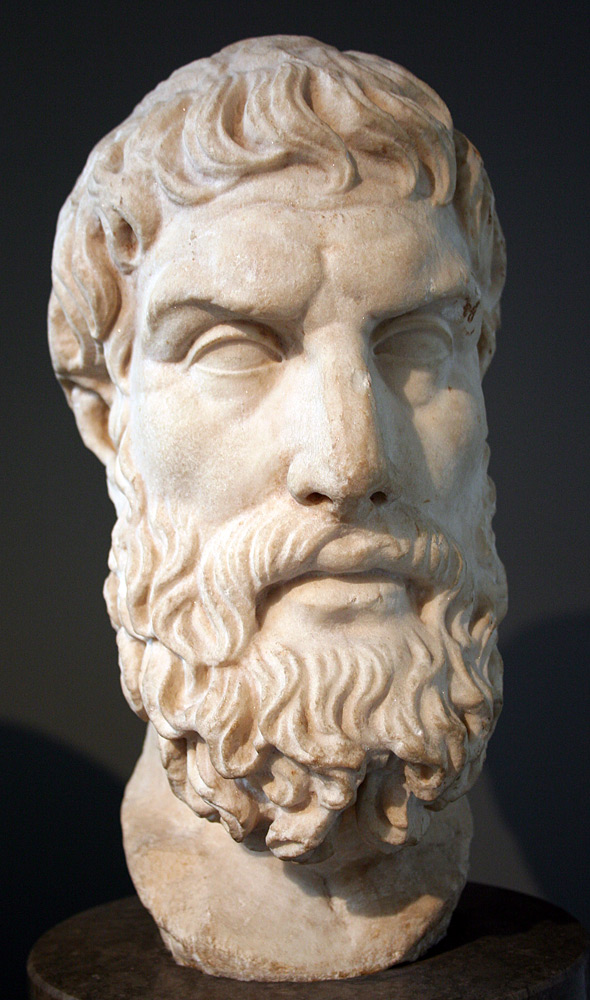
The problem of evil was perhaps first put by a Greek thinker some 500 years before the birth of Jesus. Although Epicurus’ simple paradox lacks Heller’s singular wit, it remains as powerful and as unanswered today as it did when it was first posed:

Is God willing to prevent evil, but not able?
Then he is not omnipotent.
Is he able, but not willing?
Then he is malevolent.
Is he both able and willing?
Then whence cometh evil?
Is he neither able nor willing?
Then why call him God?


As the philosopher David Hume would note centuries later, “God’s power is infinite. Whatever he wills is executed but neither man nor other animals is happy. Therefore he does not will their happiness. Epicurus’ questions are yet unanswered….”

Attempts to resolve Epicurus’ riddle have occupied theologians since the dawn of the Christian era, and I submit have failed utterly. You will, through the course of this conference likely hear many of them. Free will is the usual fall back position – humans suffer because humans choose to inflict suffering. Great – except it is difficult to connect free will to an earthquake, flood or viral epidemic.

Others will claim original sin is the source of what ails us. Except we know there was no Adam and Eve that spawned the species – as any biologist can tell you, if there is only one mating pair of a mammalian species left, that species will quickly die out as inbred genetic defectives. In any case, condemning an entire species for the alleged crimes of two people is unjust and unloving by definition.

Still others attempt to say that god will eventually take care of evil after a bloody apocalypse in which man kind is judged. Fantastic, except that does nothing for those who have been ravaged by cancers or killed in wars. This also suggests, if true, a certain capriciousness and feckless morality to god. He could have prevented the deaths of six million Jews during the Holocaust, or other atrocities, but says instead “Ah, I’ll get around do something about this eventually.”

To make this point clear, let’s conduct a quick thought experiment. Imagine you are walking down the street and a man in front of you falls over from a heart attack. You are armed with a cell phone can with a call to 911 can save his life. Or you can walk away with the promise that at some point in the future, you’ll make a sizable donation to the Heart and Stroke foundation. The moral choice is obvious.

Others have simply abandoned the standard arguments, throw up their hands and say god MIGHT have a reason for letting horrors visit themselves upon mankind, but we just don’t know. And since we don’t know the mind of god, the problem of evil therefore solved. Well, this line is simply an appeal to ignorance to avoid the central question and a rephrasing of “god works in mysterious ways.” And we know what Yosarrian thought about that.

Some take Epicurus’s riddle to be such a damning argument as to demolish the very notion that an all powerful, all loving god even exists. That may be so, although on it’s own it does not dispense with the notion of any god, merely those purported to be all powerful, all knowing and all loving gods. It’s the fantastic dearth of evidence to back up the supernatural claims made by theistic religions is more than sufficient to dismiss them.

Indeed, it stretches credulity to accept the notion of god as Judaism, Christianity and Islam would have us believe. To borrow from Christopher Hitchens, what these religions are asking us to believe this: We know that as a species, human beings have been on this planet for between 100,000 and 200,000 years. If we use the lower figure and say 100,000 years, what the Abrahamic faiths would have us believe is that for 96,000 years or so the human condition was as Hobbes would describe it: nasty, brutish and short. We are killed by bacteria and viruses we don’t know are there, by weather and natural calamities we have no understanding off. Women routinely die in childbirth and life expectancy is less than 25 years. This is to say nothing of what people do to each other for food or land. Slowly over this period, however, by the sweat and toil of people, rise great civilizations in China, in India and in Greece. After all this, heaven decides it's time to intervene. And it does so consistently to illiterate, stupefied peasants in the middle east, rather than in part of the world where the message could be spread.

Indeed, the idea that god is all loving is undone not merely by critical examination, nor by Epicurus’s razor like paradox, but by the religious texts themselves.

In the Old Testament, for example, God murders often and in great numbers. He orders several ethnic cleansings, including a standing order to wipe out the town of any people who dare suggest to the Hebrews that they follow another god. He orders a father to murder his own son as test of loyalty and even personally commits genocide and ecocide on a global level. My own personal favorite is when god orders up a couple of nasty bears to tear 43 children apart for calling a bald man has no hair. Even if taken as metaphor, these are not stories about love, but about an uncontrollable, petty rage that would make even Zeus blush. Were such a god to actually exist, it would not be a creature to bow down to, but to openly oppose on basic notions of justice and human solidarity.

Even in the New Testament we see the contradiction continue. It is only in the New Testament that we are introduced to the utterly immoral concept of hell, where one can be tortured forever for rejecting god’s “love.” Where “salvation” comes in the form of a bloody human sacrifice that any of us would feel duty bound to stop if we had been there. It is made worse because the crucifixion would rob us of personal responsibility, upon which all ethics must be based, in favor of vicarious redemption. Indeed, I openly reject the “sacrifice” of Jesus. I would want no part of it, were it to be true, because I reject the notion that someone has to die for my alleged crimes.

However, as it seems on the weight of evidence obvious there is no reason to accept these claims about a god – as self contradictory as they are – why should I or any non-believer actually care about the problem of evil? It’s because the inability to reconcile the concept of god with the reality of suffering and evil leads, in far too many cases, to morally and ethically reprehensible behavior.

The most obvious results can be seen in the middle east, where honor killings still result the horrific deaths of innocent people, particularly women, for violations of religious laws. In parts of the Muslim world apostasy remains a capital offense. In Afghanistan, Muslim clerics recently sentenced a young couple to death for eloping contrary to their religious edicts. The growing imposition of the Sharia law in Afghanistan has resulted in a law making martial rape legal. You see the point. Only when one’s views are so utterly removed from the reality of human suffering can one seriously make a claim that a wife must provide sex to her husband upon demand. Some niceties do exist, however, in the minds of gruesome Muslim clerics with little sense of compassion. One claims that a wife can say no - but if she does then her husband has the right to starve her.

But the western world should not be so smug. Recently, the Pope declared that condoms make the AIDS epidemic worse in Africa – a continent where more than 25 million have died from the illness and millions more are infected. We know beyond any shadow of a doubt, thanks to science, that condoms have a significant impact in reducing the spread of this virus, yet the church sees fit to ignore this and reject it as a theological issue – which has a significant impact in Africa where the words of a pope carry significant weight. The church’s position is plainly wicked because it contributes to suffering and death. No amount of declaring it to be a faith issue, and thus beyond reproach, can change that.

Where the secular humanist will examine the issue from a utilitarian perspective with an aim of reliving suffering, the church is irrationally dogmatic and dismissive of evidence.

This was powerfully seen only last month in Brazil during the aftermath of the rape of a 9-year-old girl by her step father. He had apparently been abusing her for three years and she ended up pregnant. With twins. At 9-years-old. Her doctors said she would not survive carrying the babies to term, let alone deliver them. Now, in Brazil, abortion is only legal in rape cases and if the pregnancy threatens the life of the mother. This qualified as both and the courts granted permission for the procedure.

The church’s reaction to this? Not concern for the suffering this poor child has endured at the hands of a rapist, nor the suffering she will continue to live with for much of her life, but with the abortion. Because the Vatican has declared it a sin. So they petition the courts to deny the abortion claiming the babies could be delivered via c-section. Never mind these bishops are not medical doctors, and are not considering the mortal danger the child is in.

When that failed, the church excommunicated the girl’s mother, lawyers, and doctors. They saved her life, but they have been drummed out of the church. No big deal for non-believers but catastrophic for those who do. They would have thrown the girl out to, but apparently the Vatican as a rule against excommunicating minors.

By the way, just to add insult to injury here – guess who was NOT excommunicated? The rapist step father– the criminal who set off a chain of suffering with his evil actions. A chain the church, because it fails to grasp the reality of suffering – has helped perpetuate.

Human beings suffer. We cannot avoid it. We commit evil acts. This is not because we are made to suffer to allowed to by a divine hand be it caring or capricious. It is because we live on a planet with a shifting crust and powerful weather systems that orbits a start that bathes the planet in radiation – a star that will eventually burn itself out and take this entire planet with it.

We suffer because we are a product of an unguided evolutionary process that shapes all life on this planet, one that does not work from blueprints, but jury gigs systems from the materials at hand. That life can be benign, like a tree, or lethal, like insects that eat other organisms from the inside out. In our case we continue to carry what Darwin called the lowly stamp of our origins. For all our intelligence and brilliance we are still at the mercy of urges, defects, and instincts. And yes, we suffer because of our choices.

How do we best respond to both those forces, both within our control and beyond it? We do so by recognizing not that suffering is part of a grand plan, but something we can combat. We feed the hungry. We provide proper medical care to the sick. We do not fret and worry about the destination of souls or the hereafter. We help each other in the here and now.

Nor do we treat evil as something divine or that exists with a greater moral justification we just don’t understand. We fight it. We certainly do not follow the words of Jesus who, according to the Gospel of Matthew, counsels us to “not resist and evil person.” This hopelessly naive view would allow the Hitlers and Osama Bin Laden’s of history to burn civilization to the ground. Or to put this another way: the choice not to resist evil is a choice to allow it to flourish. In our own life times, the example of the Rwandan genocide should serve as a powerful reminder of what happens when evil is not resisted. Mountains of bodies and rivers of blood are the logical end result of putting Jesus’ doctrine into practice.

The world is not much helped by the suffering of poor people. To truly face human suffering and deal with it as such we must abandon the confused and contradictory theologies that would distance us from it. Rather we can walk the path of a much greater and humane tradition than what is found in the Bible or the Koran. The Greeks had a basic moral and ethical idea that can be expressed as “Be careful whom you turn from your door.” It is famously the operating ethical system of Homer’s Odyssey. And it says that you help your fellow creatures in need because one day you might be the one who will survive on the charity of strangers. Human solidarity, as expressed in this fashion, gets us a very long way to creating a better society for everyone.

It is not perfect. We will stumble. We will fail. But that is almost the point, that we struggle knowing this to be so. And knowing this is the only life we have, that we will cease to exist when we die as we did not exist before we were born, means we have this one and only chance to make a difference.

Grappling with evil and suffering and lending aid to our fellow creatures is something that we, believer and non-believer alike, should gladly do. But never should we treat suffering as mysterious, unassailable or worse, as something good.


Thursday, April 2, 2009

On magic water and mumbo jumbo.

Fanaticism consists in redoubling your effort when you have forgotten your aim.
-George Santayana

I have often been told I am religious. And that I have a religion. News to me because, as an atheist, I really don't possess anything that can be identified as a religious feeling about anything and I do not subscribe to any particular dogma. Still, this does not stop a certain stripe of theist, usually Christian, from claiming that my atheism is just as much a religion as their faith. Usually I will ask said theist to explain what my religious beliefs actually are, what holy books I believe in, what supernatural gods I might pray to and what priests or clerics I defer to on matters ranging from diet to sex.

The answers are invariably bizarre and betray a basic lack of knowledge about science and philosophy. I suspect that many theists simply cannot conceive of living without religion and so assume that atheists have equivalents to the beliefs they hold so dear. If they have a god, so must I. If they have a bible or a pope, so must I. So instead of the Bible, I am told I have "faith" in Darwin's The Origin of Species. I am often told that I "worship" Darwin, that I have "faith" that "nothing created something," and that I will blindly follow Dawkins or Hitchens or whoever. It's a through the looking glass view of atheism that more often than not just makes me giggle.

Maybe the most oft repeated criticism is that atheism is "militant" and just as irrational as the religion I critique. This too is laughable...well I used to think so anyway. Most atheists I know have little interest in "organized" or institutional atheism. Sort of defeats the purpose frankly. Which is why I have such a dim view of the "atheist churches" that have cropped up around the interwebs. Aside from being a contradiction in terms, the idea that I need a special place to gather once a week to be told what I believe and chat in front of others some mindless creed strikes me about useful and trying to play a DVD using a flash light. It is certainly fun to meet with my fellow heathens to chat about things now and again and humanist and free thinker organizations play a useful role in organizing charitable and community work. I even applauded the atheist bus campaign not because it has any chance of deconverting believers (In find attempts to convert others to be rather vulgar anyway.) but because it helps gives non-believers a public voice. But an atheist church? WTF, man.

Sadly, there has developed a strain of "atheism" that seems to thrive on the ridiculous. Recently, some Brits have decided they want to be "de-baptized" or un-baptized or use that red light thingy from Men in Black to have their baptism erased from their memories. They are even handing out baptism-free certificates. Most of these folks were like me and were baptized as an infant incapable of forming a single thought.

Now I quiet agree that baptizing a baby is barking mad as the babe has no means to decide for itself whether it wants to a join a chruch. But if you grow up and abandon religion, what does it matter? Some gruesome old celibate sprinkled water on your head, muttered a prayer and SHAZAM you were baptized. That is what we are talking about here: a bit of water and some mumbo jumbo, none of which the atheist believes has the slightest significance. It is not as if the Anglican or Catholic churches have some voodoo zombie control power over those who have been baptized. The pope cannot make you dance to his tune just because someone sprinkled some water on your head a baby. You were "un-baptized" the moment you stopped believing in it.

It just doesn't matter. Baptism might mean a whole lot to believers but to those us of who long ago left religion behind it has about as much meaning as the latest marshmallow addition to Lucky Charms (which is such a nasty cereal by the by. Blech!)

All this irrational blah blah blah about reversing baptisms just a waste of energy when one considers the far more important battles to fought.One is tempted, watching hese spastic attempts to erase baptisms to quote William Shatner from that classic Saturday Night Live sketch: "Get a life, will you!"

Tuesday, December 30, 2008

God Mail - I'm mad as hell and I'm ranting.


If we go back to the beginning we shall find that ignorance and fear created the gods, that fancy enthusiasm or deceit adorned them, that weakness worships them, that credulity preserves them and that custom respect and tyranny support them in order to make the blindness of men serve their own interests.

-Baron d'Holbach

What IS it with some Christians? They just can't leave you alone. They just can't. At some point, they figure it was their mission in life to run about and try to get as many converts as possible. I actually wonder if these people think there is some kind of heavenly tote board where Jesus keeps track of how many converts each Christians gets. "Oh look, Bob got two more. But Suzie here, hasn't had a single convert this week! She'd better pick up the slack!"

I mean, what would the winner get anyway? If there was any justice in the universe they'd end up with a T-shirt that said "I converted the heathens and all I got was this lousy t-shirt."

Of course, some of them are pretty open about why they cannot leave the rest of us alone. They say, with that creepy Barney the Dinosaur smile on their faces, things like "You know, if you see a hungry person, and you knew what it was like to go hungry, wouldn't you want to feed them? That is all I am doing." Yeah, well, Jesus-Boy, guess what? I'm not hungry! And even if I was, I ain't buyin' what you're selling!

Naturally, someone of them, when you really get angry after they have been on your metaphysical ass like a cop on donuts, will appologize. "I'm not perfect," they'll say. "We're all sinners you know. I include myself in that too. I'm a sinner too, that's why we need Jesus." Excuse me, but maybe you believe you were born a worthless sinner who has to pay the price for the alleged "sin" of Adam - which amounted to free thinking if you really consider the story - but some of us have a little more self respect than that. Putting aside the story is nothing but a myth for a moment, why does anyone think saying "I'm a sinner too" qualifies as an excuse for being an ass?

Ok, by now you can tell I am rather annoyed, and this post is not really of the same quality of my usual fair here on the handbook. But have you ever had a day where you just have had enough? Today was one of those for me. So you theists with porcelain sensibilities, stop reading now. I've duly warned you, so if you get all offended and weepy after this...well, we're all sinners right?

Anyway, I am more than used to Christians trying to convert me. They've been trying most of my life and at this point nothing much surprises me. I've heard it all. Over the last few weeks, for reasons that escape me, my videos on Youtube, and my blog here, have resulted in a wave of believers all attempting, desperately, to show me how wrong I am and just how much I need this Jesus guy. They tell me atheism is a tool of the Satan. (Hint to Christians: I'm an atheist If I don't believe in a god, why the hell do you think appealing to a devil is going to carry any weight? Think about it.) They tell me how much Jesus loves me. They threaten me with eternal torture in hell. (Another Hint: Again, don't believe in Jesus or a hell so...gah, why do I bother?) Others try the usual arguments from design and arguments from morality. These are easily dispensed with, but I will at least give them props for trying something that doesn't sound insane....because insane is what I often get. Consider this gem from a Youtuber who tries to argue...well, I am not sure what he is trying to argue, truth be told:

In order for something to be faith there must be less evidence. In old times God actually spoke to man, and showedhim great works, the more unpure man became the less God could talk them,makes sense when you thik about pure energy and bad energy. Or like this car radio waves versus traffic sounds that have other radio n waves or honking there horns.

If spirit means constant energy,and whhen you break everyuthing to an atom, and it sees u and it turns invisble and stops blinking,that is remnance of a spiritual thing that made everything,because it leaves behind a constant energy.
Which would mean that is the remnance of Gods energy.
And if God is energy he stays constant and can manipulate other energies,also he can be asexual which is why he can create things,
energy can't be destroyed, like static electricity, can be produced in many things
And if sin= inhereted bad genes, wickedness, and sickness,or bad genes you can pass down.

Makes since why there is sickness

Stuff like this really does make me fear for the future of the species.

Now, before I go on, let's make something clear from the outset. My blog and my videos are open for anyone to comment, even if their comments make it sound as though they allow Mike Tyson to use their brains as a punching bag. By putting my views out there, I open the door, deliberately, to the views of others. This is the way it is, and I encourage it. I even encourage views I don't like particularly. That's really the whole point in writing the essays I do, and make the videos I do. So while someone trying to get me to become a Christian by telling me I am a puppet of the devil is barking mad, in putting my opinons out there, I have to tolerate a certain level of, shall we say, unique opinons. Fortunately, for every screwball who thinks quoting bible versus at me actually works there is often a more thoughtful theist who, while I probably won't agree with them, at least as something interesting to say.

However, there are areas of ones' life where you think the believer with the evangelical itch would be able to restrain themselves. You know, like the mail. My mail. As in, mail I send to other people.

But alas, like the god of the Old Testament, some believers have a very serious impulse control problem.

I sent some Xmas presents to my mother and step father via UPS. (yes, I just wrote Xmas instead of the Jesusmas thing. Why? Because I feel like being a gadfly. nah nah nah.) When the package arrived it had on it a nice, friendly sticker some UPS employee though worthwhile to place on it. It read, in bright friendly letters: GOD LOVES YOU.

Oh really? Does god also realize I don't want him on my goddamn mail? I can only assume that the UPS employee who thought it was totally appropriate to use my mail as a tool to proselytize to the person I was sendingto it is the "just feeding the hungry, we're all sinners so I can do whatever the hell I want" variety. Or maybe it's the "I love you, so I don't want you go to hell, so I am going to do whatever I can to save you." Or maybe he or she is one of those really insipid gotta-convert-the-heathen-types who actually believe if you read the right bible passage to someone at the right time, the clouds will part, a beam of light will fall upon the head of the non-believer and to a chorus of angels singing Hallelujah, the heathen is converted!

Either way, I just don't give a crap. Believe it all you want. I don't really care about that either. But do not, I repeat NOT, put it on my mail. DON'T DO IT.

Look, I am pretty passionate about philosophy, politics, science and atheism (even though I think the term atheism itself is pretty silly...but that is for another, less ranty day.) But you don't see me sticking quotes from Richard Dawkins or Bertrand Russell on random stranger's mail now you do? I don't inavde your personal space with my philosophical views. You are chosing to read this of your own accord. You can stop reading whenever you bloody well please. In fact, even the most so called "fundamentalist atheist" (Another hint to believers: the phrase fundamentalist atheist is a contradication in terms and makes you sound ridiculous. If you investigate why some Christians call themselves "fundamentalists" you'll understand why.) would not put an atheist sticker saying "Christopher Hitchens loves you" on your mail.

But not this beleiver. Oh no. He thought it was prefect okey dokey to use someone else's mail to try and win a convert. I mean, I use UPS for business as well. I wonder if this slap happy Mensa group brainiac ever paused to think of the possible consquences of doing that. What if I was sending a resume to prospective employeer, who gets my packet and sees in happy letters reading GOD LOVES YOU on it? Somehow, I doubt leaving an impression of being a rabid bible thumper is the best way to impress a possible new boss. Not that our fundy friend in UPS cares. He's saving souls after all right?

Now, I know what you might be thinking. "Jesus, Grant. It's just a fucking sticker. Mellow out dude. Have a cheeto." And maybe you have a point. Then again, why should I tollerate this sort of invasion into my personal and private space? Why should anyone? Because someone, somewhere thinks the words "it's my faith" is some kind of get out jail free card? There is no justification for it, no matter what Mad God Sticker What God Sticks At Midnight thinks. (A obscure Tick reference there for those in the know.) At best it was unproffesional. Fortunately, a very helpful chap at UPS customer service though so too when I called and is doing whatever UPS does when this sort of thing happens.

So now I have to wonder if the god sticker guy will fess up if he caught? You know, bearing false witness and all that jazz? And if he does, what will his excuse be? Somehow I would not be surprised if as a defense, the phrase "we're all sinners you know," passes his lips.

Gah. What IS it with some Christians anyway?

Sunday, May 11, 2008

Expelled - the Jake LaMotta of Creationism.


That's where science in my opinion, this is just an opinion, that's where science leads you. Love of God and compassion and empathy leads you to a very glorious place. Science leads you to killing people.

- Ben Stein


Oh it all reeks of desperation doesn't it? 

The oxymoronically named "creation science" movement in America is like a slap happy prize fighter who can't realize he's losing. Worse, he just takes his beating until his face is an unrecognizable mess and figures because he is still standing at the final bell, he has won some kind of moral victory.

Remember that line from Raging Bull when Jake LaMotta takes a vicious beating at the hands of Ray Robinson. His blood drips from the ropes and his face looks like he kissed the express train. And despite the one sided, brutal ass whupping he took, he walks up to Robinson and says "You didn't get me down, Ray. You never got me down, Ray."

That's the creation science movement, or as it likes to call itself today while dressed up in drag - Intelligent Design.

For anyone who is keeping score, the movement has been doing the Jake LaMotta - with all that former fighter's, er, charm and, uh, grace - for more than a decade now. Having not produced a single shred of evidence for their claims (they still haven't figured out that declarations of faith that an ancient religious text is perfect, a scientific theory does not make.), having been told by the Supreme Court of the United States that they cannot violate the establishment clause of the constitution by teaching the Bible in science class, and having lost yet another high profile court case two years ago in Dover, creationist blood is all over the ring.

And still they say "You didn't get me down, Ray. You never got me down, Ray"

Battered, bruised and bleeding, the 21 century dress up version of creation is called Intelligent Design (This is the creationism redux that was used as a speed bag during the Dover trial) and its has decided to risk its remaining brain cells with yet another trip into the ring - this time as a documentary with a tenuous grip on facts called "Expelled." I'm not going to review the film here. It's been so completely ripped to shreds by reviewers like this one, or this one by Richard Dawkins called Lying for Jesus, that there isn't any need for me to go on about it other than to say if you do go see it, be prepared for an assault upon your higher reasoning centers the likes of which you have not seen since the Y2k panic.

What I want to talk about here is the utter dishonesty of the entire ID scheme. You see, there is a myth, largely propagated by the poorly named Discovery Institute in its own hilariously bad videos that are more devoid of fact than your average Access Hollywood episode, that ID came about because some cutting edge scientists got together and realized that Darwin was wrong and really some "unnamed" supernatural designer created all life.

The reality is that ID is the brain child of a Christian apologist lawyer who wouldn't know good scientific thinking from a hole in the ground. Goes by the name of Philip Johnson. Johnson, uh, designed the whole ID thing as a way to get around pesky Supreme Court rulings that said no Bible in the science class. Now, when asked for TV cameras about ID, he will contend there is a real controversy among scientists about about ID. (This is a lie. Only members of the tiny but loud ID creationist movement say there is a controversy. And in any case "teach the controversy" is one of their transparently bad back door attempts to slip god into science class.)

But when speaking to fellow believers, the truth comes out. The idea behind ID is to change science so that it accepts untestable conclusions about supernatural causation. Then, once that is accepted, you just push people toward believing that causation is the Christian god and Shazam! Christian utopia!

Johnson called this Trojan Horse approach to evangelism "the wedge strategy" and it so impressed the good folks at the Discovery Institute, that they founded their entire ID strategy upon it, as laid out in the infamous Wedge Document - something the institute still tries to distance itself from even though it lays out their wishful thinking and near theocratic plans in detail.

Anyway, when before the right audience Johnson drops all pretense about being scientific and admits the bait and switch he wants to pull off:


The objective (of the wedge strategy) is to convince people that Darwinism is inherently atheistic, thus shifting the debate from creationism vs. evolution to the existence of God vs. the non-existence of God. From there people are introduced to 'the truth' of the Bible and then 'the question of sin' and finally 'introduced to Jesus.

- Phillip Johnson

Right from the horse's mouth. These people have no interest in science. They want to convert people to their version of their religion. Period. It would be funny if these folks were not so serious about it. LaMotta took a huge amount of punishment, but that didn't make him less dangerous in the ring. Johnson et all are very serious even if they keep on losing and losing big.

So what has this to do with Expelled? Well, Stein and the gang want us to believe two things about their film. First, it is a movie about academic freedom and attempts to crush a rival theory to evolution by "expelling" pro-ID scientists. Or as Stein puts it, to keep science from ever touching god. The other thing is that Darwinism is evil because it promotes atheism and thusl created Adolf Hitler.

Both claims are just plain false, and if you read the reviews I linked to above, they are both dealt with well enough. What interests me is the first claim. (I've discussed the bizzaro claims that Hitler's actions were the result of atheism elsewhere in the Handbook.)

While Stein blathers on about defending academic freedom in the film and in SOME interviews, in others he is more candid about his reasons for making the film. Like Johnson, when in front of the right audience (read creationists) he is more than happy to detail his true beliefs.

Check out the clips in this Youtube video by way of an for instance. In it Stein says two very revealing things. First, and I quoted him above, that science leads to killing people. Not science cures illness, feeds the hungry, sends humans into space, creates technology we use everyday, but to killing people. That is what science is to him - the road to murder. The other comes when asked why he thinks its important to see Expelled. And he says its because he wants people to believe they are god's creation. No talk about academic freedom or expanding the frontiers of science. But because he wants to covert you. Period. It's about religion. It's always been about religion. Like every other high profile member of the ID community, Stein reveals his true purpose - its not about science, its about religion.

And its only about their version of Christianity. The producers of Expelled would not include biologist and Catholic Ken Miller in the film because, they said, he would confuse the issue. Miller actually disproves Expelled's entire premise - that "Big Science" is hunting down scientists who believe in god and kick them out of the club. Miller, who helped bury ID at the Dover trial with his brilliant explanations of evolution, is a well known Roman Catholic. The very fact that he, and the rest of the 40 per cent of the National Academy of Science that do believe in some kind of god, even exists blows the movie's entire premise to, if you will excuse the expression, kingdom come.

But fortunately Expelled isn't getting much traction beyond those to whom the film is preaching what they already believe. It has been widely panned. Its box office returns were actually pretty good its open weekend when believers put down their money to see it. After that, the returns dropped like LaMotta should have. Bottom line, however, is that the creationists lose. Again.

However, this won't stop them. Already we are seeing the next strategy. Infantile "academic freedom" bills are before several states and are being used as a way to try yet again to creep creationism into the class room through the back door. These bills will likely be demolished when the court challenges come.

But for now the Ben Steins and Phillip Johnson's of the world can stand there bleeding after another beating and say "You never got me down." Some pugs just never know when the fight is over.

Saturday, May 10, 2008

Beyond Mere Atheism - An introduction.

I am reluctant to use the word atheist to describe my own unshakable disbelief, and that's not because I'm ashamed, afraid, or even embarrassed, but simply because it seems so self-evidently true to me that there is no god, and giving that conviction a special title somehow dignifies what it denies. After all, we don't have a special word for people who don't believe in ghosts or witches.
-Jonathan Miller

It goes without saying, I think, that atheism - the intellectual position that one does not accept claims about the nature of life and universe without evidence - is in the midst of something of a revival. Just run the words "Atheist" or "Atheism" through Google news and you'll a host of articles and blogs. These days most are broadsides fired by believers disquieted by a growing number of people who dare not believe. But you'll also find commentary by the Four Horsemen - Richard Dawkins, Christopher Hitchens, Sam Harris and Daniel Dennett, the authors of the books which energized the surge in atheist conviction we see in public.

The most common feature of this so called "New Atheism" is a slashing critique of religion, rooted in a demand for evidence, and those of us inspired by the horsemen have followed their lead. Having dispensed with the supernatural claims of religions, particularly the assumed but unsupported by evidence claim of a god, this critique turns to the moral and ethics of religion - morals and ethics which, more often than not and particularly in the Jewish/Christian/Muslim mode, are found wanting in the extreme.

Believers often rail against this approach. We often ignore their complex and arcane theology, and they see this as a fundamental weakness. If we only understood the 21st century theological views of why god is a loving god, we, the growing legion of new atheists, would understand our arguments are weak. If only we spent more time discussing Aquinas and Augustine, we would see our demand for evidence isn't important.

Nonsense. All the theological gymnastics are fairly useless if evidence,( and by this I mean scientific evidence) the first question, the most important question, cannot be answered. As Cicero put it: the first question in this subject of the nature of the gods is do the gods exist or not? If we conclude, and we do on the basis of evidence, the gods do not exist, then need we worry about god as love, or god as father or god as source of morals? Surely not. What matters is what do those beliefs lead people to do, good or bad.

We need not go upon bended knee and only face the theological questions on the terms believers would have us use. If evidence matters, and we are told we must have regard theological "truths" and statements about the nature of reality, then we can hold those claims up to science, to reason and demand meaningful evidence. And where evidence is lacking, the claim can be (at least provisionally) put aside.

This is what the believer objects to the most. Ironically, they will often (as a scan through google blogs and news will attest) claim that new atheists use a "scientific dogma" and that atheism is a religion.

It is, to be sure, a curious claim. Atheism has no codes. No creeds. No commandments. No pastors, priests or popes. It has no holy texts. No churches, temples or sacred grounds. It has no punishments, real or imagined, for not being an atheist. So where exactly is the "religion" of atheism? I've asked many a believer this question and have yet to hear a reply. I wait still.

And this business about "scientific dogma"? It is an even more through the looking glass argument. What is dogmatic about asking for evidence about claims about the nature of reality? What is dogmatic about requiring evidence to make a conclusion? Surely, there are atheists who do not believe in a god because, well, they just don't. But it is the thrust of the "new" atheism that conclusion is the child of evidence. And it is the evidence that fuels disbelief. To say there is no god simply because you don't believe in one is as empty a statement as a declaration of faith. An examination of evidence is required either way.

And so the screeching apologists attempt to claim that atheism is a religion, making silly references to "secular gods" (again what is a secular god? I've asked this of apologists and never received an answer either.) in an attempt to redefine what atheism is. If they can - as the ill named Discovery Institute and its vapid Intelligent Design movements try to do - define atheism as a religion then they can say "Well see? You have no more evidence than we do! Atheism is just like religion. QED." Unable to face the stark fact that their faith claims exist in a vacuum of evidence, they try this transparent slight of hand to make their case.

Many of us new atheists take some joy in this. And I must confess to enjoying an argument where a theist is left with no recourse but to try and change the definition of science, or ignore logic and evidence when making assertions. But as much as their discomfort might appeal to some our darker impulses, we should temper our glee.

The fact of the matter is that while we argue, some of us with a particular almost evangelical passion, more often than not we are making a case about why religion fails. That is, we are largely anti-theist in our approach. To be sure this is a necessary part of the argument. If one regards religious claims on their own merits, that is to say they are claims about the nature of reality - and claims so powerful we ought to obey the religion that makes them (often with a big OR ELSE attached to it), then we can and should examine said claims through the lens of evidence. If someone says "Gay people should not be allowed to marry because God says so in the Bible," we can see what evidence there is said god exists. If there isn't any, the claim can be dismissed.

However, that only gets us part of the way. Because, like it or not, religion has been a vehicle for morals and ethics for a very long time. This does not mean morality comes from religion. Indeed, one need only point out that what a Christian believed to be moral 300 years ago and what they believe in to moral in 2008 shows the transitory nature of the moral zeitgiest, even among believers who like to imagine their morality is immutable. Christian, Buddhist, Islamic and other moral and ethical systems change with changing times. As Richard Dawkins puts it in the God Delusion:

Slavery, which was taken for granted in the Bible and throughout most of history, was abolished in civilized countries in the nineteenth century. All civilized nations now accept what was widely denied up to the 1920s, that a woman's vote, in an election or on a jury, is the equal of a man's. In today's enlightened societies (a category that manifestly does not include, for example, Saudi Arabia), women are no longer regarded as property, as they clearly were in biblical times. Any modern legal system would have prosecuted Abraham for child abuse.
But if it is indeed true, as I have argued before, that morals and ethics are largely what we say they are at any given point in time and place - our own evolved moral and ethical leanings notwithstanding - and if it is true that religion has been a delivery system of ethics and morals, and if we say that the metaphysical claims of religion are false, then what kind of morality do we want? What kind of ethics do we want? What kind of society do we want?

You see the point. The revived atheism largely lashes out at religion. However, we aren't doing nearly as good a job at talking about the way things ought to be. If we reject, for very good reasons, the morals of the Christian bible, what then do we accept?

The problem, as I noted above, is that atheism is barely a thing at all. It has no rules, or commandments. And I for one certainly do not think some moves to create atheist "churches" are a good idea. Institutionalized atheism is likely to become the very thing we rail against. Nevertheless, I believe we have to stop allowing the theists to frame moral and ethical arguments for us and start to try to discuss where we think the moral zeitgeist should go.

Most of the time we deal with theists, like Dinesh D'Souza, who blather on about "if there is no god then anything is permissible." This is a rhetorical trick that sets up a false zero sum game of either/or with no other possiblities. For example, one can say that not everything is permissible if we as a society say it isn't. Or that moral standards are set by social contract. The point is, the kind of shallow thesis the likes of D'Souza present limits the entire discussion. And for the most part we allow this to be the way the argument is framed rather than define our turf for ourselves.

So if morality and ethics is what we say it is, then I think its high time we moved beyond mere atheism and say!

So that is what I hope to explore on this blog in the next several related posts, (all to be titled "Beyond mere atheism") and during my Youtubery, in the hopes of engaging others in this discussion. Please feel free to join in.

By way of a short introduction, I think the general guiding principle of a post-Christian, non-theistic morality, should be a kind of utilitarianism that has regard for reducing human suffering while increasing human happiness. This could be, ironically enough, part of my past Buddhist training speaking, but I think we should be advocating the ideas of Epicurus and John Stewart Mill and Jeremy Bentham as both atheistic and necessary modes of moral and ethical thinking
.

In the first part of this series of essays "Beyond Mere Atheism" I will start to look at these ideas more closely.