Saturday, May 10, 2008

Beyond Mere Atheism - An introduction.

I am reluctant to use the word atheist to describe my own unshakable disbelief, and that's not because I'm ashamed, afraid, or even embarrassed, but simply because it seems so self-evidently true to me that there is no god, and giving that conviction a special title somehow dignifies what it denies. After all, we don't have a special word for people who don't believe in ghosts or witches.
-Jonathan Miller

It goes without saying, I think, that atheism - the intellectual position that one does not accept claims about the nature of life and universe without evidence - is in the midst of something of a revival. Just run the words "Atheist" or "Atheism" through Google news and you'll a host of articles and blogs. These days most are broadsides fired by believers disquieted by a growing number of people who dare not believe. But you'll also find commentary by the Four Horsemen - Richard Dawkins, Christopher Hitchens, Sam Harris and Daniel Dennett, the authors of the books which energized the surge in atheist conviction we see in public.

The most common feature of this so called "New Atheism" is a slashing critique of religion, rooted in a demand for evidence, and those of us inspired by the horsemen have followed their lead. Having dispensed with the supernatural claims of religions, particularly the assumed but unsupported by evidence claim of a god, this critique turns to the moral and ethics of religion - morals and ethics which, more often than not and particularly in the Jewish/Christian/Muslim mode, are found wanting in the extreme.

Believers often rail against this approach. We often ignore their complex and arcane theology, and they see this as a fundamental weakness. If we only understood the 21st century theological views of why god is a loving god, we, the growing legion of new atheists, would understand our arguments are weak. If only we spent more time discussing Aquinas and Augustine, we would see our demand for evidence isn't important.

Nonsense. All the theological gymnastics are fairly useless if evidence,( and by this I mean scientific evidence) the first question, the most important question, cannot be answered. As Cicero put it: the first question in this subject of the nature of the gods is do the gods exist or not? If we conclude, and we do on the basis of evidence, the gods do not exist, then need we worry about god as love, or god as father or god as source of morals? Surely not. What matters is what do those beliefs lead people to do, good or bad.

We need not go upon bended knee and only face the theological questions on the terms believers would have us use. If evidence matters, and we are told we must have regard theological "truths" and statements about the nature of reality, then we can hold those claims up to science, to reason and demand meaningful evidence. And where evidence is lacking, the claim can be (at least provisionally) put aside.

This is what the believer objects to the most. Ironically, they will often (as a scan through google blogs and news will attest) claim that new atheists use a "scientific dogma" and that atheism is a religion.

It is, to be sure, a curious claim. Atheism has no codes. No creeds. No commandments. No pastors, priests or popes. It has no holy texts. No churches, temples or sacred grounds. It has no punishments, real or imagined, for not being an atheist. So where exactly is the "religion" of atheism? I've asked many a believer this question and have yet to hear a reply. I wait still.

And this business about "scientific dogma"? It is an even more through the looking glass argument. What is dogmatic about asking for evidence about claims about the nature of reality? What is dogmatic about requiring evidence to make a conclusion? Surely, there are atheists who do not believe in a god because, well, they just don't. But it is the thrust of the "new" atheism that conclusion is the child of evidence. And it is the evidence that fuels disbelief. To say there is no god simply because you don't believe in one is as empty a statement as a declaration of faith. An examination of evidence is required either way.

And so the screeching apologists attempt to claim that atheism is a religion, making silly references to "secular gods" (again what is a secular god? I've asked this of apologists and never received an answer either.) in an attempt to redefine what atheism is. If they can - as the ill named Discovery Institute and its vapid Intelligent Design movements try to do - define atheism as a religion then they can say "Well see? You have no more evidence than we do! Atheism is just like religion. QED." Unable to face the stark fact that their faith claims exist in a vacuum of evidence, they try this transparent slight of hand to make their case.

Many of us new atheists take some joy in this. And I must confess to enjoying an argument where a theist is left with no recourse but to try and change the definition of science, or ignore logic and evidence when making assertions. But as much as their discomfort might appeal to some our darker impulses, we should temper our glee.

The fact of the matter is that while we argue, some of us with a particular almost evangelical passion, more often than not we are making a case about why religion fails. That is, we are largely anti-theist in our approach. To be sure this is a necessary part of the argument. If one regards religious claims on their own merits, that is to say they are claims about the nature of reality - and claims so powerful we ought to obey the religion that makes them (often with a big OR ELSE attached to it), then we can and should examine said claims through the lens of evidence. If someone says "Gay people should not be allowed to marry because God says so in the Bible," we can see what evidence there is said god exists. If there isn't any, the claim can be dismissed.

However, that only gets us part of the way. Because, like it or not, religion has been a vehicle for morals and ethics for a very long time. This does not mean morality comes from religion. Indeed, one need only point out that what a Christian believed to be moral 300 years ago and what they believe in to moral in 2008 shows the transitory nature of the moral zeitgiest, even among believers who like to imagine their morality is immutable. Christian, Buddhist, Islamic and other moral and ethical systems change with changing times. As Richard Dawkins puts it in the God Delusion:

Slavery, which was taken for granted in the Bible and throughout most of history, was abolished in civilized countries in the nineteenth century. All civilized nations now accept what was widely denied up to the 1920s, that a woman's vote, in an election or on a jury, is the equal of a man's. In today's enlightened societies (a category that manifestly does not include, for example, Saudi Arabia), women are no longer regarded as property, as they clearly were in biblical times. Any modern legal system would have prosecuted Abraham for child abuse.
But if it is indeed true, as I have argued before, that morals and ethics are largely what we say they are at any given point in time and place - our own evolved moral and ethical leanings notwithstanding - and if it is true that religion has been a delivery system of ethics and morals, and if we say that the metaphysical claims of religion are false, then what kind of morality do we want? What kind of ethics do we want? What kind of society do we want?

You see the point. The revived atheism largely lashes out at religion. However, we aren't doing nearly as good a job at talking about the way things ought to be. If we reject, for very good reasons, the morals of the Christian bible, what then do we accept?

The problem, as I noted above, is that atheism is barely a thing at all. It has no rules, or commandments. And I for one certainly do not think some moves to create atheist "churches" are a good idea. Institutionalized atheism is likely to become the very thing we rail against. Nevertheless, I believe we have to stop allowing the theists to frame moral and ethical arguments for us and start to try to discuss where we think the moral zeitgeist should go.

Most of the time we deal with theists, like Dinesh D'Souza, who blather on about "if there is no god then anything is permissible." This is a rhetorical trick that sets up a false zero sum game of either/or with no other possiblities. For example, one can say that not everything is permissible if we as a society say it isn't. Or that moral standards are set by social contract. The point is, the kind of shallow thesis the likes of D'Souza present limits the entire discussion. And for the most part we allow this to be the way the argument is framed rather than define our turf for ourselves.

So if morality and ethics is what we say it is, then I think its high time we moved beyond mere atheism and say!

So that is what I hope to explore on this blog in the next several related posts, (all to be titled "Beyond mere atheism") and during my Youtubery, in the hopes of engaging others in this discussion. Please feel free to join in.

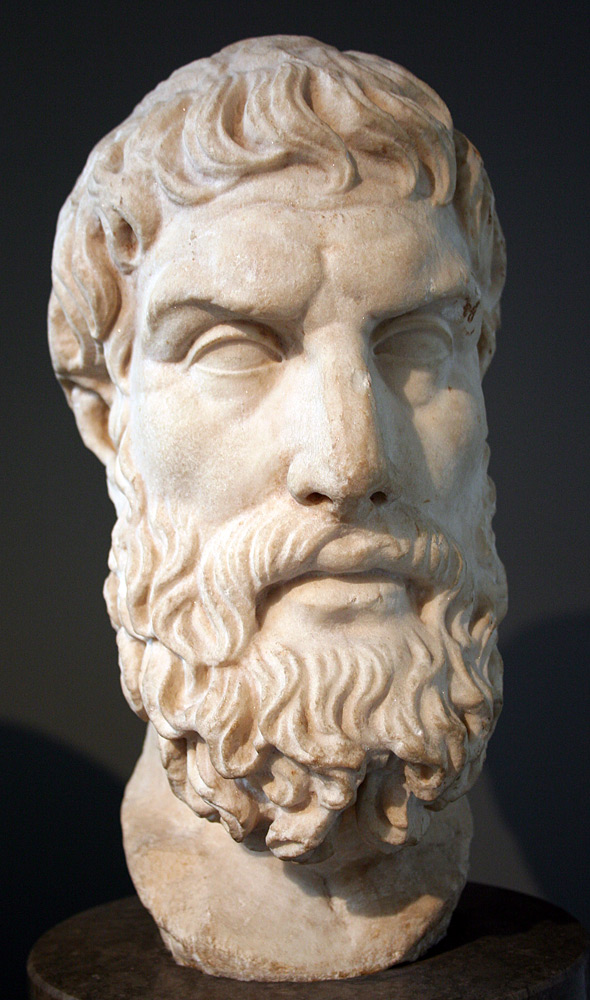
By way of a short introduction, I think the general guiding principle of a post-Christian, non-theistic morality, should be a kind of utilitarianism that has regard for reducing human suffering while increasing human happiness. This could be, ironically enough, part of my past Buddhist training speaking, but I think we should be advocating the ideas of Epicurus and John Stewart Mill and Jeremy Bentham as both atheistic and necessary modes of moral and ethical thinking
.

In the first part of this series of essays "Beyond Mere Atheism" I will start to look at these ideas more closely.


Friday, May 9, 2008

On ghosts, goblins, and credulous journalists - from the Standard


Sir, there is a distinct difference between having an open mind and having a hole in your head from which your brain leaks out.

-James Randi

The following appeared in my column fro the St. Catharines Standard on May 8.


We should stay open-minded, Oxford biologist Richard Dawkins sometimes says, but not so open-minded that our brains fall out.

In an age when we are trying to cure cancer, protect the environment and make sense of increasingly powerful tools of genetic manipulation, Dawkins' point has a particular and urgent weight to it.

But, alas, the titanic challenges of today, which can only really be grasped with a degree of scientific literacy, aren't good enough for some who would rather retreat into the mush-headed world of angels, ghosts, goblins, the Fort Erie cougar and gasoline under a buck a litre.

Consider, for example, stories about a local teen competing on YTV's Ghost Tracker. It blurs the line between real science and new-agey nonsense as teens are judged on their "skill" at tracking ghosts. The producers even use made-up technobabble to make it all sound scientific. (The Keefer Mansion apparently rates high on the "paranormal index," whatever that is.)

Even more insulting to the intelligence are recent reports about the efforts of the Niagara Area Paranormal Society. They don't have positron gliders or the ECTO-1, but like the Ghost Trackers, they have a heap of impressive-looking equipment. You know, microphones, cables, cameras. The entire Radio Shack-does-Ghostbusters ensemble.

So these, uh, "investigators" recently visited the Welland Museum to hunt down some ghosts. No one was slimed, but they claimed to have recorded mysterious voices emanating from the ether - evidence, they say, of the kin of Casper lurking in the museum.

I don't want to vent about this, but given the uncritical reporting on these things, consider this column the rational response.

Ghost hunting as a scientific endeavour is on par with holistic dentistry, tarot card reading, past-life regression and intelligent design. Fortunately, amid the throngs of the credulous are those willing to strike back with a dose of scientific skepticism. Like James Randi by way of a for instance.

Randi, a Toronto native who lives in Florida, is North America's top gun when it comes to debunking the claims of paranormal, um, "detectives."

He doesn't say the supernatural is impossible, but rather there isn't a shred of evidence to back up claims of seeing dead people or UFOs or reading the future in tea leaves.

"If these people want to make claims about paranormal phenomenon, they have to prove it," he told me in a recent interview.

Randi put forward a million-dollar prize to anyone who can prove it using rigorous scientific testing. To date, every attempt has failed miserably.

So what about these "voices" recorded at the museum? It might seem impressive at first blush. A faint murmur emanating from the dark. But when it comes down to it, either they are the voices of spirits or they are not. Period. And Randi says there is nothing supernatural in what the society found.

We live in a soup of electro-magnetic signals, he says. Cellphone traffic. FM radio stations. Disembodied messages are literally all around us all the time.

Randi said ghost hunters adjust their audio gear to the upper range of its sensitivity and because they do not shelter their equipment from the EM racket, they record strange sounds.

"You don't need to be near a powerful signal to pick this stuff up," he says. "It's everywhere. Any good soundman knows how to filter it out."

Even the equipment these, er, "sleuths" use is suspect. Many like to use the Panasonic RR-DR60 audio recorder that was discontinued because it is particularly vulnerable to FM radio transmissions.

(Just Google that model number with the phrase "ghost hunter" and you'll see how coveted a prize it is.)

So the voices they record could be real - but they belong to radio DJs and cellphone users, not Sir Isaac Brock complaining about a sharp pain in his chest. Ockham's Razor wins again.

Of course, it doesn't help that news outlets often report the claims of these Edgar Cayce wannabes without so much as a critical thought, giving them undeserved credibility.

" 'There are no ghosts' doesn't make a very good story," Randi says.

But that is the story. As Carl Sagan used to say, extraordinary claims require extraordinary evidence. If the local paranormal society had actual evidence of spirits they would have uncovered an entirely new field of science. I'm sure the Nobel folks would be interested.

At the very least, they could get a million dollars. So to the folks of the Niagara Paranormal Society and Ghost Trackers - Mr. Randi is waiting.

Monday, April 21, 2008

Does God Exist: The Debate - Part two of two


I believe that there is no supreme being with human attributes - no God in the Biblical sense - but that all life is the result of timeless evolutionary forces, having reached its present transient state over millions of years.
-Charles Templeton, preacher turned agnostic.


In my previous entry I gave a brief outline of the debate between Dan Barker of the Freedom from Religion Foundation and Peter Youngren of the Niagara Celebration Church.

What I want to do here is examine a couple of the arguments presented by Peter, by way of my own personal analysis.

Through the debate, Peter made a repeated asseration regarding believing big brain types: Albert Einstein and Anthony Flew. Both deists - which to Peter's credit he acknowledged. But Peter's point, was clear: Here are two men of extraordinary intelligence an insight, and they are convinced at the very least convinced there must be some kind of ultimate force behind the universe. It doesn't interact with us in the biblical sense of God coming down with a burning bush or genocidal flood, but they nevertheless believed there must, logically, be some kind of universe force that got everything in motion.

The connection Peter was trying to make was, if they can accept a god, deist though they were, they surely we of lesser minds cannot argue with them. As Peter said "Anthony Flew says he is convinced by the evidence. Well, that is good enough for me."

This is not a particularly new argument, and one that is often used by believers, albeit often by those lacking Peter's capacity for public discourse. It fails for two reasons. First, the deist view is not the Christian view. Although Peter was, by way of an unspoken inference, trying to link the god of Einstein and Flew to his own Christian god, no such link can be made. Even if one concedes that that there must be a "first cause" behind the universe, that is not evidence for the Christian (or Muslim, or Jewish, or Hindu or whatever) version of god. This is because, as I have noted before, the Christian god has very particular attributes. He has a definite personality - a temper, a willingness to heap favors on those he likes, and destroy those he hates. He describes himself as jealous. And he defiantly has an ego: Just check out the number of times god describes himself in the Old Testament. When he isn't threating to blast someone out of existence, he heaps upon himself all manner of praise. The Greeks would have instantly recognized the hubris in him. Or to put this another way, Dr. Phil would have a field day with God.

Anyway, I digress. The point is one simply cannot look to the deist mode of belief as evidence the Christian god is real - as Peter was doing often during the debate - because the god of Einstein and Spinoza and Flew doesn't have a personality. It doesn't even have a consciousness really. Or if it does, it has never expressed to our species. It NEVER performs miracles or hears prayers. It is really only a kind of universal force that gave order to the whole ball of wax. But that's it.

I think Peter understands this, but tried to make the connection anyway almost as if to say, "Well, if one can accept this deist notion, then its only a small jump to get to Jesus." That just doesn't follow.

Still, Peter Youngren would not be Peter Youngren if he didn't possess the gift of gab. Frankly, Peter is the most talented and convinced preacher I have ever met. And I've met many. He is able to make things seem to fit together - even if in the cold light of logic they do not.

It's worth noting as an aside that Peter is not a fire and brimstone preacher. He isn't threatening anyone with hell fire (although he certainly does believe hell is a real place) and that was demonstrated in a moment at the end of the evening. The last question of the night was asked by a fairly hostile woman who attacked Dan Barker with both guns. She was a health profession, she claimed, and said she sees miracles all the time. She even went so far as to claim that she healed a cancer patient of a tumor!! Well, at this point I was forced to step up, as moderator, and ask her to ask a question. Her reply was as strange as it was shocking:

"Ok my question is to Mr. Youngren, can you be gay and be Christian?" she said before hurriedly sitting down in the nearest seat.

The bait and switch had left the audience shocked for a moment. Dan replied to her by saying that if she had evidence of such things she ought to present it to experts who can examine it. When Peter spoke, he said he was not into, what he called "a ministry of behavior modification." Anyone is welcome at his church, he said, and its not up to him to judge them. Gay people are as good and decent as anyone else he said. It was a moment that had even non believers such as myself nodding our heads in agreement. It was a brilliant bit of preaching and politics, frankly, that spoke both to human solidarity and need to treat everyone with respect.

I bring it up because of what came next in the closing remarks for the evening. Peter closed by saying it was fascinated by Dan Barker: an ex-evangelical turned atheist. In some ways, Dan's story is similar to that of Canadian preacher and former peer of Billy Graham Charles Templeton. In fact for a time, Templeton was the evangelical star and Graham the opening act. But Templeton lost his faith, as Dan did, and began to speak out against what he saw as the cruelty of the Christian doctrine and unlikelihood of a god existing at all. He did not become an atheist as Dan did, but an agnostic.

Templeton wrote a book called "Farewell to God: My reasons for rejecting the Christian faith." It is a deeply personal book, although not the best written, and it was one of the books that got me thinking seriously about the unsoundness of the entire Christian thing. It is, therefore a book I know well and my ears perked up when Youngren invoked Templeton's name.

Peter related a story about Templeton in his final remarks. He read from part of Lee Strobel's book The Case For Faith. Strobel is an apologist who claims to have been a former journalist and atheist. He has a whole series of "Case for..." books purported to "objectively" investigate the claims of Christianity. Generally speaking, these books have all the substance of flash paper. They are not objective at all, and Strobel almost never speaks to experts in their fields or to skeptics. He interviews other believers and accepts their conclusions with a monolithic credulity that no journalist worth his salt should ever display. They are basically apologist tracks thinly dressed up as journalism in the same way Intelligent Design is creationism dressed up in drag.

Still, Strobel occasionally presents an interesting interview or two, and his interview with Templeton is one. Peter read in it part to the audience, and I have to say, his reading was both powerful and moving. Like I said, Peter isn't an excellent preacher by accident. He knows his craft.

In the interview, Strobel asks Templeton what the thinks about Jesus and God. Templeton, now suffering from the slow brain rot of Alzheimer's, sickly and near death, dismissed with the entire idea of a loving god. But for Jesus, he appeared to show some genuine emotion. Strobel, shockingly displaying real journalistic instincts, pressed the issue and asked directly what did Templeton think about Jesus:

"Everything good I know, everything decent I know, everything pure I know, I learned from Jesus. Yes...yes. And tough! Just look at Jesus. He castigated people. He was angry. People don't think of him that way, but they don't read the Bible. He had a righteous anger, and He cared for the oppressed and exploited. There's no question that he had the highest moral standard, the least duplicity, the greatest compassion, of any human being in history. There have been many wonderful people, but Jesus is Jesus."


Peter now had the audience in rapt silent attention. He lowered his voice a bit and read the final lines from Strobel's interview.:

"And if I may put it this way," (Templeton) said as his voice began to crack, "I...miss...him!"


Peter then noted that Templeton waved Strobel away saying "Well, enough of that," and then he ended the story. He went on to say that even Templeton knew Jesus in the end and hoped that Barker would come know the true faith soon.

Being the moderator, I couldn't say anything. My job was not to inject my own thoughts to the debate, but rather to keep it moving in an orderly and fair manner. My own views were not relevant. But I knew something that perhaps Dan Barker, and probably Peter Youngren, did not. The interview with Templeton might be as Strobel reports it. But it is certainly not any evidence that Templeton was near to some kind of death bed conversion.

And this is why I often say "Fact matter!". Because knowingly or not, Peter was not presenting Mr. Templeton's views fairly or accurately. Let this be a lesson to anyone willing to rely on Lee Strobel for information. As a preacher, the guy makes a lousy reporter.

The fact is that yes, Templeton DID miss Jesus. He missed Christianity. He missed the whole religious thing. But this was not shocking or even new. In Farewell to God, Templeton writes about how he missed the certainty religion provides, the easy comfort of believing Jesus and a god that loved him and had a plan for him. And while he could not longer bring himself to believe it anymore, he missed being a believer and could not ignore the impact the figure of Jesus had on his life in a positive sense. No one every said learning was easy or that enligthenment came cheaply. Change is always painful and often filled with regret. Templeton wrote:

"You find yourself rethinking the story of Jesus of Nazareth and, for all its intrinsic fascination, it is not the same. You almost feel that someone you love has died and that you are bereft. And little wonder: no one in Western history has so laid claim to the hearts of men and woman as has Jesus of Nazareth. How memorable his brief life. How fascinating his personality. How insightful his teaching. How inspiring his courage. How shattering the horror of his death. How - perhaps more than any other's in Western history - his life has stimulated the potential for goodness in those who take him seriously.

I miss all that, and more. But, analyzed, the feeling is not unlike the occasional yearning to return to one's earlier years when life was simpler. In the end, one must follow the truth as one perceives it. Not to do so is to live a lie.

Growing up isn't easy, but is there any valid option?"


This is what Peter Youngren and Lee Strobel fail to mention. That Templeton's missing is former faith had nothing to do with believing Jesus was the son of god, sent to save his soul. But it was a a regret at losing something that once gave him such powerful purpose in life.

Templeton, like Einstein, like Flew, ended up as a kind of deist. He believed there might have been some kind of force that got everything going, but it never interfered with human life. His missing his former faith didn't change that.

Which brings us full circle. Youngren's argument was to say "look at these smart guys, they believe in a god, so should you!" But no only is the deist god nothing like the Christian one, not only was Peter not presenting the whole truth about Mr. Templeton, but it makes a final, fatal error in logic. He appeals to authority - a view that certainly Einstein and probably Templeton would have regarded as unwise an an abdication of our own ability to examine evidence and make up our own minds.

Saturday, April 12, 2008

Does God Exist: The Debate - Part one of two

"On the subject of the nature of the gods, the first question is ‘Do the gods exist or do they not?’ It is difficult, you may say, to deny that the gods exist. I would agree if we were arguing the matter in a public assembly, but in a private discussion of this kind, it is perfectly easy to do so."
-Cicero,
On the Nature of the Gods, book one

On Wednesday, April 9, I had the pleasure of moderating a debate between one of Canada's best known evangelists and one of America's more prominent atheists. Hosted by the Niagara Secular Humanist Society at the Canadian Auto-Workers Hall in St. Catharines, the event saw Peter Youngren of the Celebration Church and Dan Barker of the Freedom of Religion Foundation square off over the question asked by Cicero all those years ago: Does god exist or not.

Being the moderator, my job was not to debate - in as much as I wanted to - but rather to play the role of referee in a boxing match - make sure the fighters understood the rules, fought according to them, and protected themselves at all times.

It was a lively and sometimes heated debate, but before I present my own views on the night I wanted to say thank you to both Peter and Dan, who were both gracious and made my job as moderator very easy. They are both very likable men, and had the audience of about 300 people.(That might not sound like any great shakes, but for this town it is nothing short of a miracle....if you will excuse the phrase.)

I opened by reading the above passage from Cicero's "On the Nature of the Gods" because when it comes to theology, his question is the first and most important to be answered. Indeed, this is why Cicero includes it early in his book.

The theology of the world's three great monotheism - Christianity, Islam and Judaism - all rest on a single proposition, that God exists. Yes, yes, they each have a different view of what god is, or isn't, but this is the first fundamental assumption each faith makes. Well, they have to, don't they? If there isn't a god then all the theological gobbledygook and fretting about what said god will do to you if you say the wrong thing at the wrong time, or get up to something with your lover the cosmic voyeur doesn't like isn't worth a bother. It all becomes counting angels on the heads of pins, doesn't it?

I chose Cicero because he expressed something else important about the debate to come - that it was a debate about the existence of god. In public. With no threat of retribution for anyone. The reason Cicero said he would only agree that it is difficult to deny that god exists in pubic, but can easily do so in private, is because for most of western history - and indeed still in many parts of the world - this not believing god stuff would get you locked up, killed or tortured. Or all of the above. Or, if this was a communist country, defending a religious belief in public would be rather like saying "well, I have the noose around my neck anyway, so I might as well just kick the horse." It's important to recognize that we enjoy a historical rarity - the freedom to believe, or not, and to debate those views in public without fear.

For those who do not know, Peter
Youngren is one of Canada's best known Christian preachers. He's been in his ministry for over 30 years, regularly travels around the world preaching and appears on TV frequently. I've interviewed him several times over the years as a journalist and while I've never agreed with his religious views, I've always found him to be a likable and sincere person. One of the things that did impress me about him was something he did right after the 9-11 attacks. Many Muslims in St. Catharines, like those around the world, felt they were going to blamed for what happened. In fact, there was a botched fire bombing at the local mosque. Peter was, I believe, the first Christian leader in the community to go to the mosque and tell them not to fear, that they were still part of the community and while he and they believed different things about god, they agreed on many things as well. So while I don't subscribe to Peter's beliefs, I certainly respect what he did to help defuse some community tensions during that time.

Dan Barker's story is really a real life reversal of Paul on the road to Damascus. For decades, Dan was just like Peter
Youngren. He traveled and preached as an evangelical preacher. He even wrote several popular Christian musicals for kids. But over time Dan's faith crumbled away. He reached a point where, like Charles Templeton (who we will hear more about later), he felt he had to make a choice between "God and truth", and truth won out. He's since become the co-president of the Freedom from Religion Foundation in the United States - and turned his musical talents to music for non-believers. Like his better known counter parts like Christopher Hitchens, Dan spends a lot of his time traveling debating with people on issues of religion.

What I'm going to do in part one is provide a quick summary of the arguments and then in part two discuss my analysis of those arguments.

The debate kicked off with opening remarks, with Barker going first and asking Peter to present evidence for the existence of god. Not declarations or statements like "Well it's all so complex here must be a god," but actual evidence. Then he asked
Youngren to do something I found very interesting: he asked Peter to provide an example of something that would, in his mind, falsify the god hypothesis. The reason is simple. Science spends most of its time trying to disprove its own ideas, looking for the evidence that "disproves" or falsify a hypothesis or theory. In doing so, science is constantly modifying what it knows by tossing out ideas that don't work. And most know what it would take to undermine a scientific theory. I mean, if a fossil rabbit was ever found in the pre-Cambrian, well, that would just about do it for the theory of evolution. Theories, even the most powerful and well-supported, can be toppled by a single bit of evidence. So Barker asked Youngren, to produce that kind of thing for the notion of god.

Barker also suggested that the morals of the bible, and of the character of god in particular isn't anything to write home about.
Referring to the old testament god as a "war god" and listed several of Yahweh's more ghastly episodes of blood-letting, he asked a question of the audience: who believed in this desert war god Yahweh. (Youngren piped up at this point to say he believed in Yahweh, but Yahweh was not a war god). The point, Barker said, is that most people are nicer, kinder and more compassionate than the god of the Bible. He then pointed to the fact that most of the gods once believed in are now regarded as myth and that everyone in the audience is an atheist with respect to Zeus, or Odin or Thor. The only difference between them and the atheist, he said, is that the atheist goes "one god further."

Youngren, who said growing up in Sweden he lived in a community that was largely atheist, took a different tact, attacking what is sometimes called "New Atheism". In particular he said the works of Christopher Hitchens, Daniel Dennet, and especially Richard Dawkins, showed a great deal of "rage." Rather then embracing science, Youngren suggested atheists ignore the evidence for the existence of god - including, he said, why many cultures have developed a notion of god. His suggestion was that human beings have an innate sense of morality and knowledge of god. Finally, he said that many scientists are believers in a god, and they point to evidence to support that belief.

This followed about an hour of back and forth debate (interrupted for about 10 minutes by problems with the CAW hall's sound system). They covered a fairly wide variety of subjects, but the heart of the debate turned on two questions: the evidence for god, and the morality of god as presented in the bible (which was a repeat of the above arguments.)

On the first question, Barker noted there was no evidence to support the claims made by believers - who incidentally cannot even agree on a definition of what god is. He further noted that if such evidence existed, as many believers claim, why has it never been presented in a scientific paper? Why not win the Nobel prize?

Youngren didn't really meet these questions head on. Instead he pointed out the number of scientific titans who professed a belief in god - including Albert Einstein. On this point, Barker gave Youngren credit because the pastor didn't make the error of saying Einstein believed in a personal god. Einstein was a kind of deist, rather than a theist and Youngren made a point of making sure that was clear. However, he did note the reasons why Einstein believed what he did, and said, in essence, if it was good enough for him why not for the rest of us?

The Q & A that followed the hour long back and forth covered much of the ground already discussed by the speakers. There were a few stand outs however. Most of the questions were directed at Barker, and were from believers. Many got up to make declarations of faith (which meant I had to tell them to ask a question or give up the mic) but generally wanted to know why Barker did not believe when, as far as they knew, the bible was completely true. Some claimed to have seen miracles and one even asked if Barker, when he was a preacher, ever saw something he could not explain. Barker's primary response was to say that, in effect, declarations of faith were not evidence that god exists. He said he also understood that people think they see
healings in churches like Youngren's all the time. He certainly did he believed. However, he admitted that at the time, he made no effort to critically examine what he saw and assumed, because of his belief, that the healings were real. Today he doubts they were, and suggests that most of the time it was merely a case of mind over matter. He said there may have been things that happened that he cannot explain, but his inability to explain them is not evidence of god.

The questions that were directed at
Youngren were largely from his own flock and some gave him an easy time, such as the young lady who asked Youngren to explain a statement he made that he could not read through Richard Dawkins' book, The God Delusion. (Yougren said he found the book angry and spiteful and felt Dawkins simply made no sense whatsoever, so he gave up reading.) But the preacher did face a couple of critical questions. One came from Horst Klaus of the Niagara Secular Humanist society. He asked if god was loving, why create animals that ate others? Why create viruses and bacteria that destroy other creatures from the inside out? Youngren replied that man created the harsh world we live through Adam and Eve's rebellion in Genesis. He also countered that God, even it appears he is doing something violent or bad, he still approached people with love.

The debate was, overall, well-mannered and was very well attended for the first time such an event has been held in St.
Catharines. I want to think both Mr. Barker and Mr. Youngren for their time and willingness to debate such an important subject.

This is a very brief sketch of the debate that night, and I will be extending an invitation to both Dan and Peter, along with Mr. Klaus to post their impressions of the debate.


From Left: Dan Barker - Freedom from Religion Foundation, Peter Youngren - Niagara Celebration Church, Grant LaFleche - Gadfly, Horst Klaus- Niagara Secular Humanists.